


Planning your wedding day schedule is one of the most important steps in creating a calm, intentional celebration. A well-designed schedule does more than organize the day. It protects your experience. It creates space to breathe. It allows your photography to unfold naturally instead of feeling rushed.
After photographing weddings for years at Loren Jackson Photography, I can confidently say this: a custom wedding day schedule is the difference between chaos and calm.
Key Takeaways
• A thoughtful wedding day schedule directly impacts how relaxed your day feels
• First looks dramatically reduce timeline pressure
• Built-in buffer time prevents small delays from becoming major stressors
• Eight hours of coverage is often the sweet spot for a balanced day
Why Your Wedding Day Schedule Matters
Most couples underestimate how quickly a wedding day moves. Hair and makeup run long. Transportation arrives late. Family members wander off. Dresses need steaming. Boutonnieres break.
None of these things are disasters. They only become stressful when there is no margin built into the schedule.
A well-structured wedding day schedule accounts for real life. It anticipates small delays and builds in protection so your day still feels effortless.
When I review a timeline, I can immediately tell whether a couple will feel rushed or relaxed. The schedule tells the story before the day even happens.
The Foundation of a Stress-Free Schedule
1. First Looks Are Essential
If your goal is a calm wedding day, a first look is not optional. It is foundational.
First looks allow us to complete the majority of portraits before the ceremony. That means:
• Wedding party photos are finished early
• Family portraits are streamlined
• You actually attend your cocktail hour
• You are not racing the sunset
Without a first look, everything compresses into a very short window after the ceremony. That is when stress begins to rise.
Couples who choose a first look consistently describe their day as relaxed and intentional. That is not a coincidence. It is the schedule working in your favor.

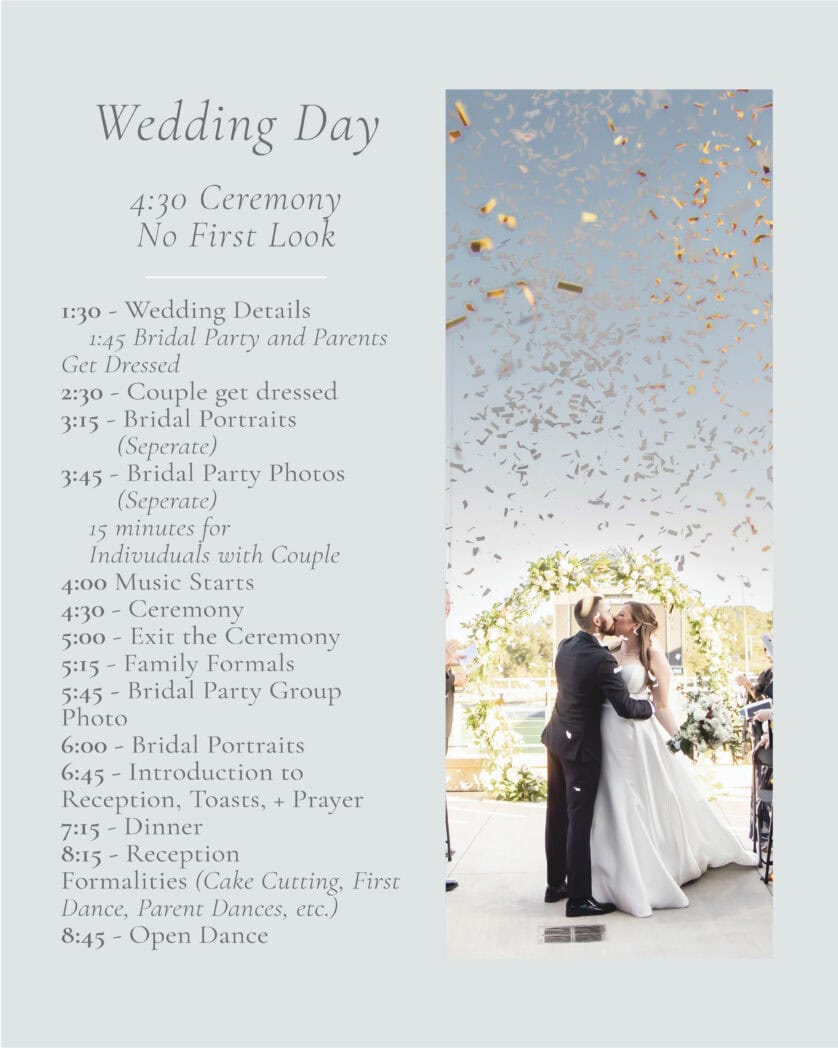
What Happens If You Skip the First Look
If you decide not to do a first look, your wedding day schedule must shift significantly.
All wedding party portraits, immediate family photos, and couple portraits will need to happen after the ceremony. That means:
• You will need a longer cocktail hour
• Guests may be waiting on you before entering the reception
• Sunset timing becomes critical
• There is very little room for delays
This does not mean skipping a first look is wrong. It simply requires a much tighter, more structured schedule. Without careful planning, this is where timelines begin to feel rushed.
2. Hair and Makeup Must Finish Early
Hair and makeup for everyone should be complete at least 30 minutes before the bride gets dressed.
This cushion allows time for:
• Touch-ups
• Gift exchanges
• Quiet moments
• Unexpected adjustments to the dress
It rarely takes 45 minutes to get dressed. But the emotional moments around getting dressed deserve space. A wedding day schedule should never rush those.
3. Buffer Time Is Non-Negotiable
There must always be a buffer built into a wedding day schedule.
Ceremonies might run long. Transportation might be delayed. A parent may need a few extra minutes.
When buffer time is built in, those moments feel manageable. Without a buffer, the entire schedule starts collapsing.
I have photographed wedding days where five minutes behind turned into thirty because there was no cushion. I have also photographed days where hair and makeup ran twenty minutes late and no one felt stressed because we had built margin into the schedule. The difference is not luck. It is intentional planning.
Every custom schedule I create includes intentional breathing room. That margin is what protects the atmosphere of your day.

A Proven Wedding Day Schedule Framework
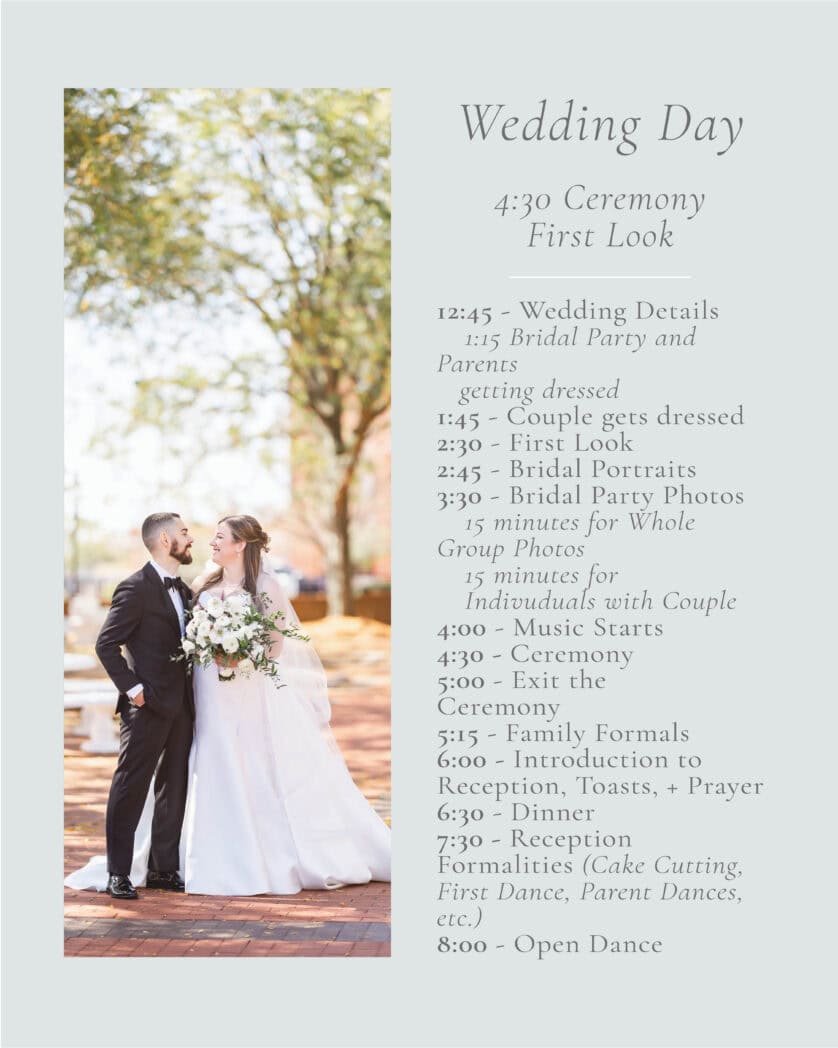
Ninety percent of my weddings follow one of three foundational schedule structures. The remaining ten percent simply require adjustments for travel between the ceremony and reception locations.
Most of my couples choose:
• An eight-hour photography coverage window
• A ceremony start time around 4:30
• A first look earlier in the afternoon
Eight hours of coverage is typically the sweet spot. It provides enough time for getting ready, portraits, the ceremony, and the reception highlights without feeling extended or excessive.
However, eight hours may not be sufficient if you are planning a full Mass, incorporating cultural ceremonies, hosting events at multiple locations, or building in significant travel time. In those cases, extended coverage protects the flow of the day.
Sample Wedding Day Schedules
How Guest Count Impacts Your Schedule
Guest count directly affects portrait timing.
Larger weddings often mean:
• Larger immediate families
• More complex extended family combinations
• Bigger wedding parties
Each grouping requires organization and coordination. Without structure, family portrait time can easily double.
For larger guest counts, I build additional time specifically for family portraits and formal photos. This ensures that portraits feel efficient rather than chaotic and that guests are not left waiting.
How Sunset Affects Your Ceremony Time
Sunset determines everything about portrait lighting.
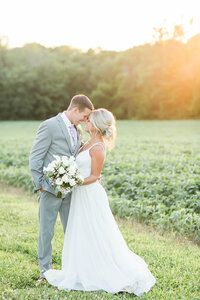
If you want glowing, natural light for your couple portraits, your ceremony time should be selected based on the season and sunset that day.
A 4:30 ceremony works beautifully for many spring, summer, and early fall weddings. In late fall or winter, an earlier ceremony may be necessary to preserve daylight for portraits. During peak summer, we may schedule sunset portraits later in the evening for that soft, romantic light.
Your wedding day schedule should be built around light, not guesswork.

Custom Wedding Day Schedules Create Calm
There is no universal wedding day schedule that works for everyone.
Your venue.
Your season.
Your ceremony style.
Your family dynamics.
Your photography priorities.
All of these factors shape the structure of your day.
When couples prioritize photography and build their schedule intentionally, they receive more portraits, more candid moments, and a far more relaxed experience overall.
The schedule is not just about logistics. It is about protecting the emotional tone of your wedding day.
Designing a wedding day schedule is part of a much bigger conversation.
Your timeline should reflect your priorities, your values, and the experience you want to have. That is the entire philosophy behind my Present Not Pressured planning framework.
It is a guided resource for couples who want to feel in control of their day without feeling overwhelmed by it.
If you are serious about building a wedding day that flows beautifully from start to finish, this is your next step.
Frequently Asked Questions About Wedding Day Schedules
How many hours should a wedding day schedule include?
Eight hours is ideal for most weddings. It allows time for getting ready through key reception events without rushing.
However, if you have multiple locations, extended travel time, a large guest list, or cultural and religious traditions that lengthen the ceremony, additional coverage may be necessary to maintain a relaxed pace.
What time should a wedding ceremony start?
A 4:30 ceremony works beautifully for many spring, summer, and fall weddings. However, ceremony time should always be selected based on season, sunset, and your portrait goals.
Do I need a second photographer?
The sample schedules referenced here are built for two photographers. If you choose single coverage, adjustments will need to be made to maintain a realistic pace.
How do I build a wedding day schedule if my ceremony and reception are at different locations?
When locations differ, travel time must be calculated carefully and buffer must be increased.
You should account for:
• Loading and unloading transportation
• Traffic patterns at that time of day
• Parking logistics
• Guest transition time
In these cases, I typically recommend adding extra cushion between events and confirming travel routes in advance. Movement between locations is one of the most common sources of timeline stress when not properly planned.
Download Your Free Wedding Day Schedule Templates
If you want a starting point, I created three foundational wedding day schedule templates that work for the majority of celebrations.
These are the exact structures I reference during consultations. They include:
• Built-in buffer time
• A first look structure
• Realistic ceremony timing
• An eight-hour photography framework
You can download all three templates here and begin building a schedule that supports a calm, intentional wedding day.
And when you are ready to create a custom wedding day schedule tailored specifically to your celebration, I would love to guide you through that process.
Because a stress-free wedding day is never accidental. It is designed.
Want a Wedding Day That Feels Present, Not Pressured?
If you loved this guide but still feel unsure how to structure your day around what truly matters, that is exactly why I created Present Not Pressured.
It walks you through how to design your wedding day intentionally, prioritize the moments that matter most, and build a timeline that protects your experience instead of rushing it.
This is not just about logistics. It is about creating a day where you feel calm, confident, and fully present.
You can learn more about Present Not Pressured here.
If you found this post helpful, share it on your wedding board on Pinterest by pinning this photo!
Looking for Northeast Ohio Weddings Venues, click here









[…] and making sure that I’m meeting the needs of my couples. I take great pride in drafting wedding day timelines that create a stress-free day. Stress-free for not only my couple but also the family there to […]